


Description
In the Basque Country the most common flutes have been made of wood or metal. The wooden ones have mainly been made of boxwood or ebony, although we also know of some made of cane. In all cases, one of the ends of the tube is closed and there is a hole there that fulfils the function of a mouthpiece. There are holes for fingering along the tube. The most modern ones usually have keys to open and close these holes. Some small wood or cane flutes have also been used, under the name of txilibitu (Basque) or pífano (Spanish) (fife)1.
All these flutes are played with both hands, placing the hole that acts as a mouthpiece in the mouth and blowing the air against the edge of that hole.
HISTORY
Although we do not know very much about the spread of these flutes in previous centuries, we know that that the fife player Cristóbal Echeverría went from Arbizu to Pamplona for the festivity of San Fermín in 1765 to play, accompanied by two tabor players (Ramos, 1990, p. 105).
In his book Los Txistularis de la Villa de Bilbao (1999), Carmen Rodríguez Suso compiled information on the evolution of the city’s fife players from the 13th and 14th centuries. Apparently, the musicians became more important over the years.

(Source: Rodriguez Suso, 1999, pp. 19-20)
Although initially they only played in ceremonies as salaried municipal employees, they gradually took over the functions of the tabor drummers, also playing music on festive days. In Bilbao it seems to have been the same person who played the fife, the txistu and the tabor; in 1772, for example, this person was José Antonio de Lizaso y Egaña, the municipal pipe and drummer2.
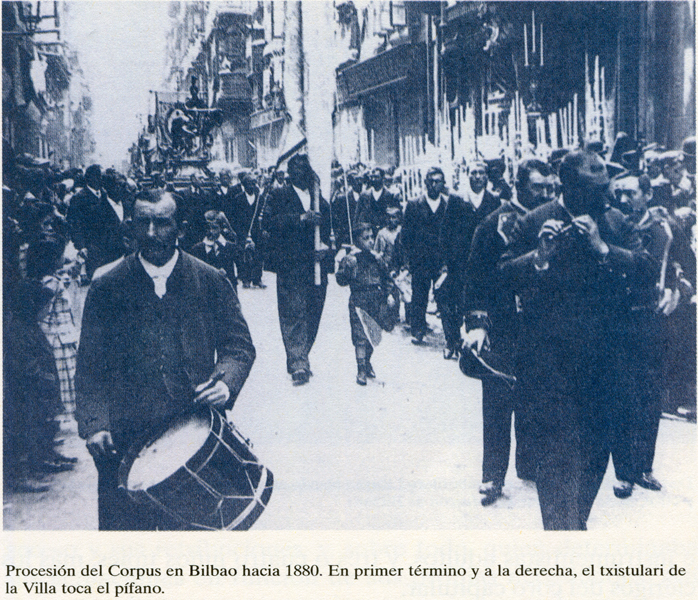
(Source: Rodriguez Suso, 1999, pp. 19-20)
In the late 19th and early 20th centuries we find flute players in the rondallas (ensembles of plucked instruments, mainly guitars) of many towns and villages together with guitar, bandurria (similar to a mandolin), lute, violin, clarinet and tambourine players in urban environments, both on the coast and inland. In this impressive photo from 1894 we see one of these groups on Paseo Ezkiaga in Hernani:
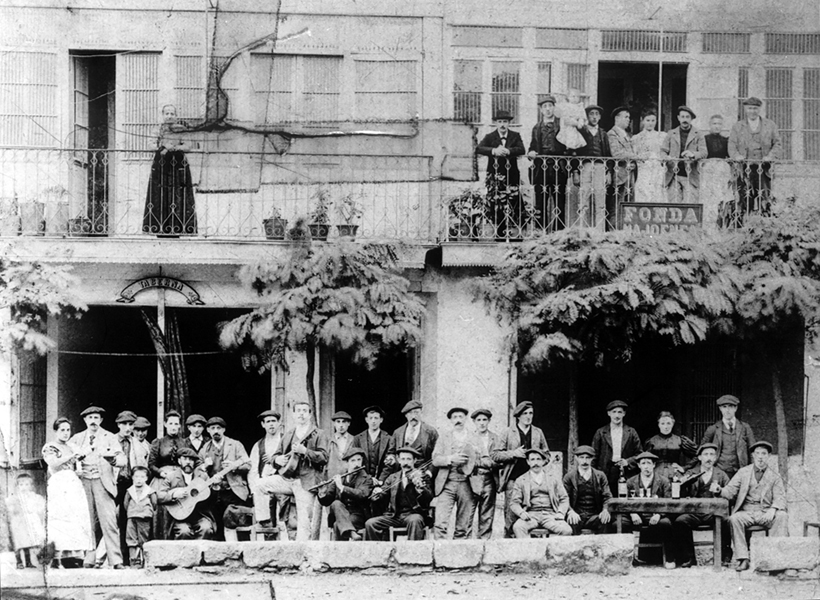
Hernani, 1894. (Source: Beltran, 1996)
In the area of Antzuola, the father and the uncle of the brothers Augusto and Benito Lamariano used to play two flutes of this type in the popular pilgrimages in the Descarga Pass and the surrounding area in the early 20th century. They continued to do this until the Civil War started in 1936. They used two different flutes: one was an ordinary flute and the other a smaller one called tertziola. Years later, the brothers Augusto and Benito started to play in this area with these two flutes, together with a drummer from Beasain who was nicknamed “Danbor”. Towards the end of their lives, the brothers stopped playing the flute and switched to the dulzaina. When we interviewed him Benito Lamariano Agirre told us:
Our father played the flute. He and his brother-in-law made up a duo. Our father played a flute called a ‘tertziola’3 and his brother-in-law a bigger flute. The group consisted of the two flautists and a tabor player. They played in popular pilgrimages and weddings in the area, and would have played in around one hundred weddings… waltzes, fandangos, Basque arin-arin folk dance events and things like that.4
As can be seen in this photo taken by Martín Ricardo in 1917 in a popular pilgrimage/dance on Mount Urgull in Donostia-San Sebastián (Gipuzkoa). Like the Lamarianos from Antzuola, the musicians who appear in the image are playing two different flutes, one an ordinary one and the other a smaller one.

People dancing on Mount Urgull (San Sebastián), 1917. (Photo: Martin Ricardo. Kutxa Fototeka)
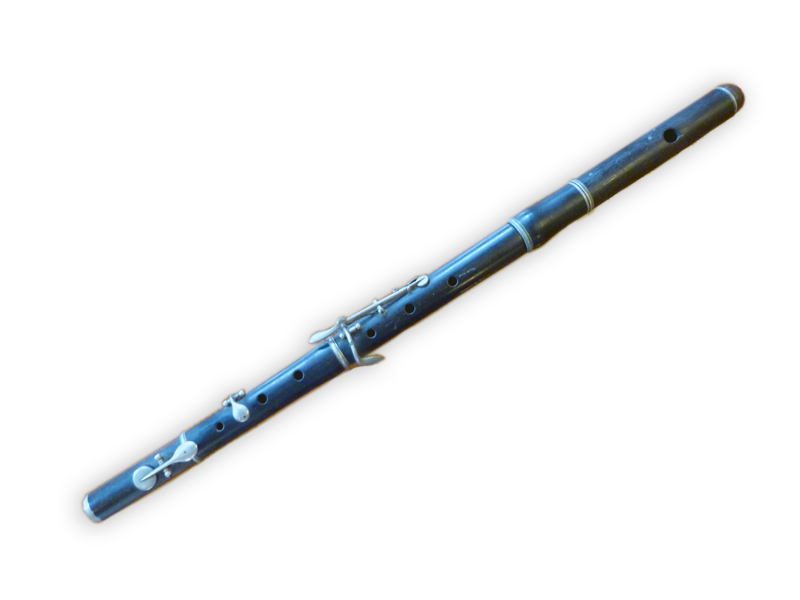
The tertziola flute of the Lamariano brothers from Antzuola. (Photo: JMBA)
In Azkoitia (Gipuzkoa), we see a group up of schoolchildren in this photograph from around 1900. Flutes can be seen:

Advanced students. (Source: Elias, 1999, p. 432)
Parades
In many towns and villages of the Basque Country alardes -processions or manifestations to commemorate historic events, usually of a military nature- have been organised for centuries, with a high level of participation by the local people. They are held in Hondarribia, Irun, Tolosa, Antzuola (Gipuzkoa) and Elorrio (Bizkaia), among other places. Music plays a prominent role in these events, with wind instruments and drums featuring strongly. In this old photograph of the Alarde in Irun (Gipuzkoa) we see the flute accompanied by drums. It should be pointed out that the main name used in Irun for this flute is the txilibito, also known as the pífano (fife).

Alarde in Irun, around 1900. (Source: Irungo Alardea. (1996). San Martzial Eguna. Enixe Records.)
There is documentary evidence from 1863 that there were three fifes and three drums in the procession of the Alarde in Irun that year. That year is considered to mark the start of the tamborrada5. In the following years txilibitos (two-handed straight flutes) started to appear, and photographs from the early 20th century these two types of flute together.

In 1927, txilibitos and pífanos together in the Alarde in Irun. (Source: Retegui, 2003, p. 108)
The 'estudiantina' of Lekeitio
In the Carnival of Lekeitio (Bizkaia), the estudiantina (group of student musicians) goes through the streets playing songs and music about events that happened in the town in the past. Guitars, mandolins, lutes, tambourines, clarinets and flutes can be heard.

Lekeitio, 1932. (Source: Lekeitioko Estudiantina. (1983). Aratuste Alai. IZ-185)
The 'Atorrak' of Mundaka
In the Carnival of Mundaka (Bizkaia), figures called “atorrak” go through the town’s streets entertaining people with their music. In this group, similar to a rondalla (ensemble of plectrum instruments), flutes have always been used.
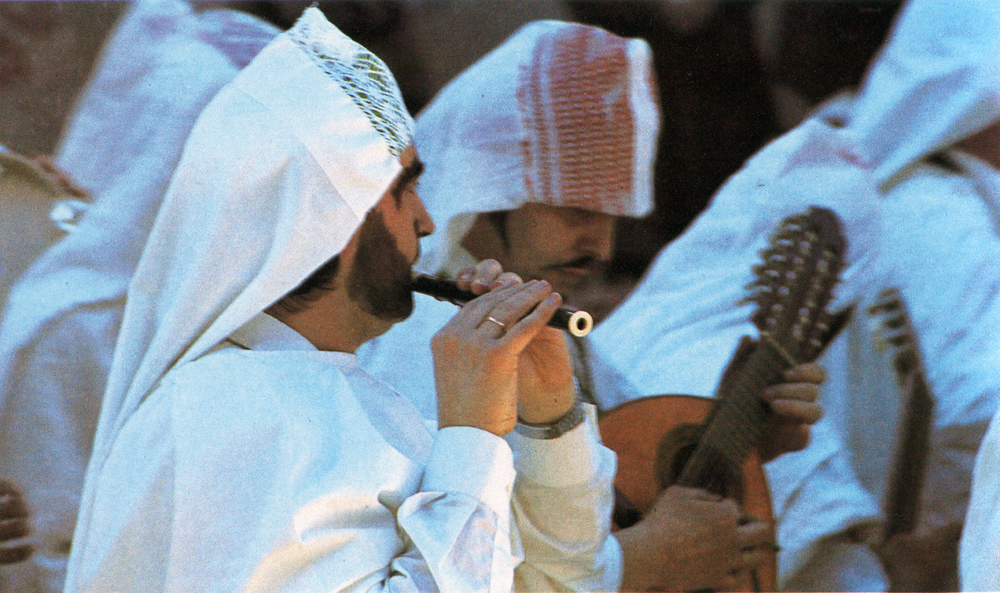
The “atorrak” of Mundaka. (Photo: Jon Kortazar. Source: Feliu, 1987, p. 138)
Flutes in a rural settling
Outside the towns and villages flutes also existed. Francisco Gárate (aka “Patxi Agerre”) from Itziar (Gipuzkoa) played the flute together with his wife, who accompanied him on the tambourine.6
In Bizkaia, as J. J. Abasolo (“Tiliño”) tells us7, in the early 20th century they played flutes with a simple structure made of cane.
Nicolás Jayo, born in Durango around 1910, played the tabor, the dulzaina and the flute (flautia). He usually played the tabor with the dulzaina player Pedro Etxebarria from Maguna8 (born in the same decade). Apparently, Nicolás also often played the flautia in festivities and celebrations, and both of them received recognition in the tribute to trikitaliaris held in Iurreta in 1989.
Based on the explanations of ‘Tiliño’, we reproduce Nicolás’ flute, with a length of 30 and 40 centimetres and a diameter of 2 and 3 cm. Tiliño gave his approval when we ed it to him.
Apparently, on seeing the flute, the dultzainero from Mañaria Juan Bilbao told him that they played a similar one made of cane when they were young1. He promised him he would make him one, but he died soon after and could not fulfil his promise.

Cane flautia. JMBA collection, no. 1189. (Photo: Emovere – Soinuenea)
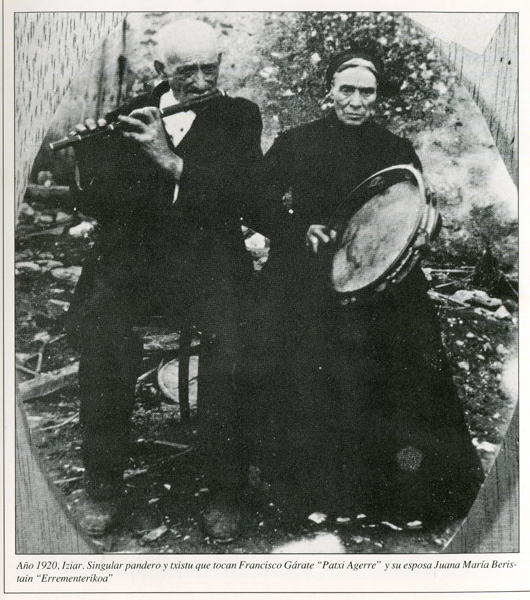
Itziar, 1920. A duo consisting of a flute and tambourine: Francisco Gárate ("Patxi Agerre”) and his wife Juana María Beristain "Errementerikoa”. (Source: Aguirre, 1992, p. 49)
In localities nearby
In the nearby Landes in Gascony (France) it is still quite common to hear the small flute called a ‘fifre’ (fife) played together with a drum.
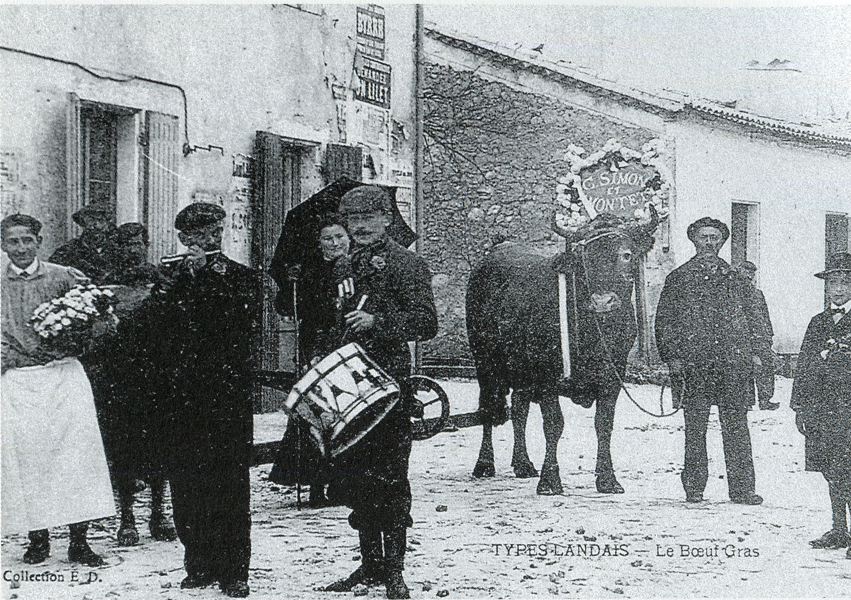
Fife and drum in the Landes (southwest France). Postcard: Types landais – Le boeuf gras. (Source: Mabru, 1988)
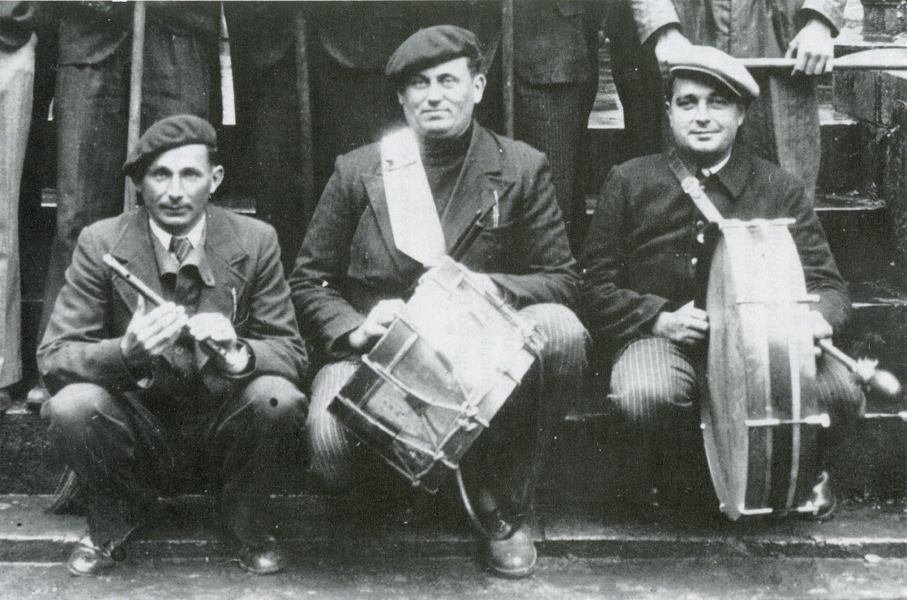
Fife, drum and bass drum. Bazas (Gascony), 1938. (Source: Mabru, 1990)
THE FLUTE IN BASQUE FOLK MUSIC GROUPS
Form the 1970s onwards the folk music movement also started to flourish in the Basque Country, as in other parts of the world, Folk groups reinterpreted music with traditional roots and created new ones. The flute played a big role in this type of group (the groups Oskorri or Azala, for example), and often gave them a characteristic sound.
ICONOGRAPHY
Labourd
BIARRITZ
CHURCH OF SAINT EUGENIA OF ROME
In the two stained glass windows of the neo-Gothic Church of Eugenia of Rome in Biarritz there are sets of angel musicians, and in each one we can see an angel playing the flute.
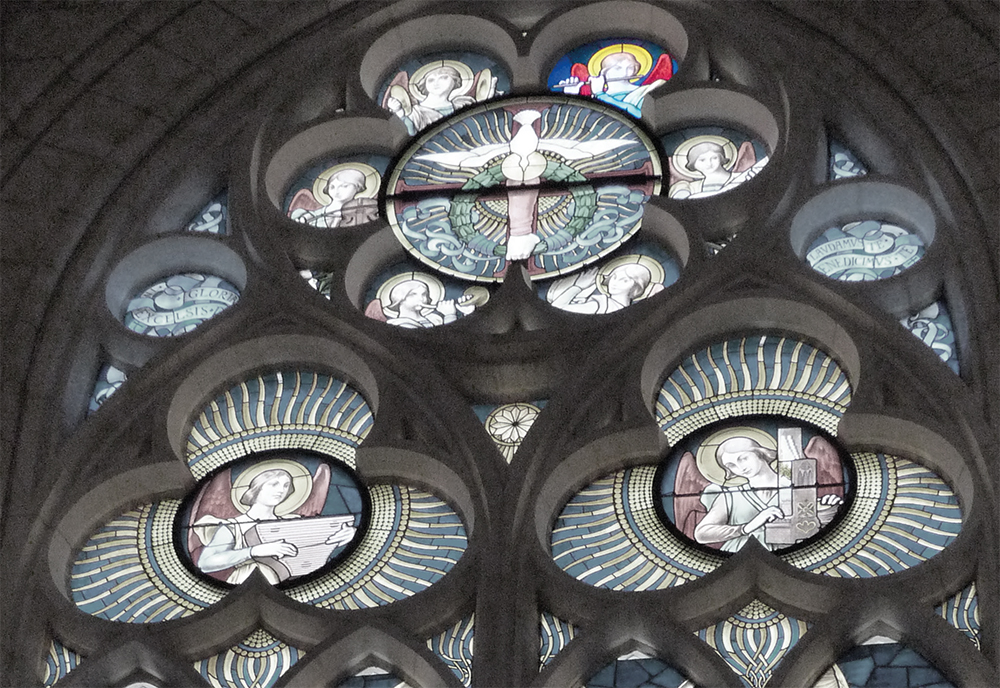

An angel playing the flute at the top of the stained glass window of the Birth of Christ in the Church of Saint Eugenia. (Photo: JMBA)


An angel playing the flute at the top of the stained glass window of Jesus blessing the children in the Church of Saint Eugenia. (Photo: JMBA)
Navarre
OLITE
CHURCH OF SANTA MARÍA LA REAL
Construction of the main façade of the church was completed around 1300. Below the great rose window, the main entrance consists of eight archivolts, and in the bottom right part of the first one there is an angel playing a flute.

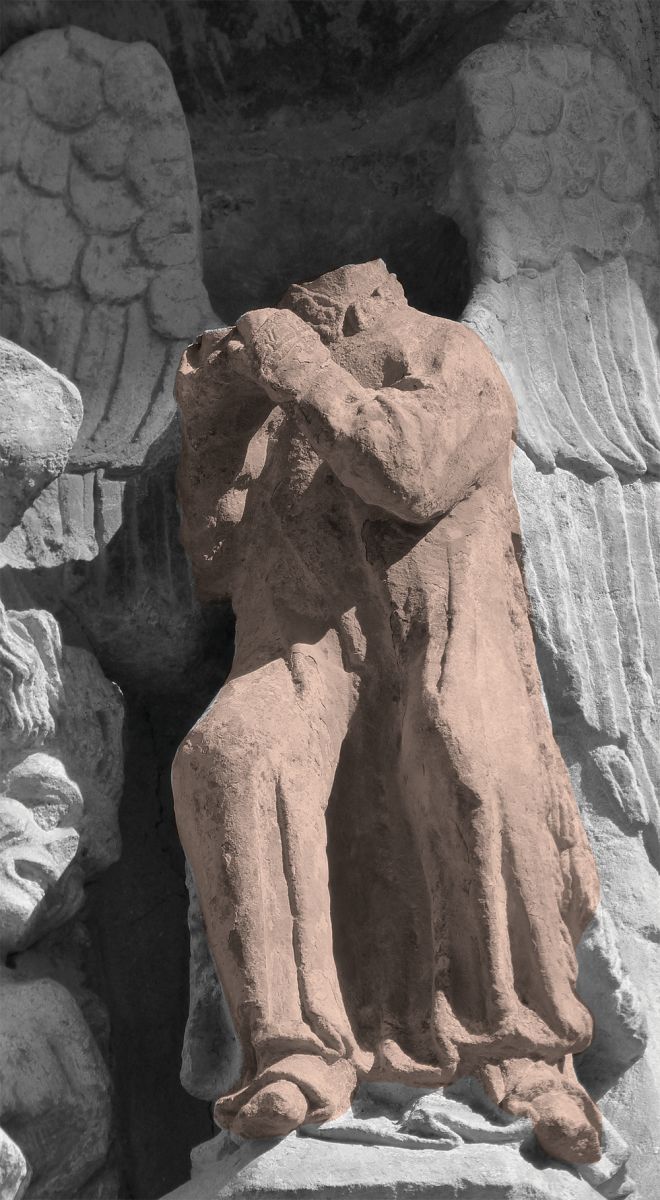
An angel playing the flute on the main façade of the Church of Santa María la Real in Olite. (Photo: JMBA)
SESMA
PARISH CHURCH OF THE ASSUMPTION
An angel appears playing the flute at the top of the Rococo organ (1771) in the parish church of the Assumption in Sesma.
At the front of the base of the same organ there are other figures playing musical instruments, and among them there is an angel playing a flute.
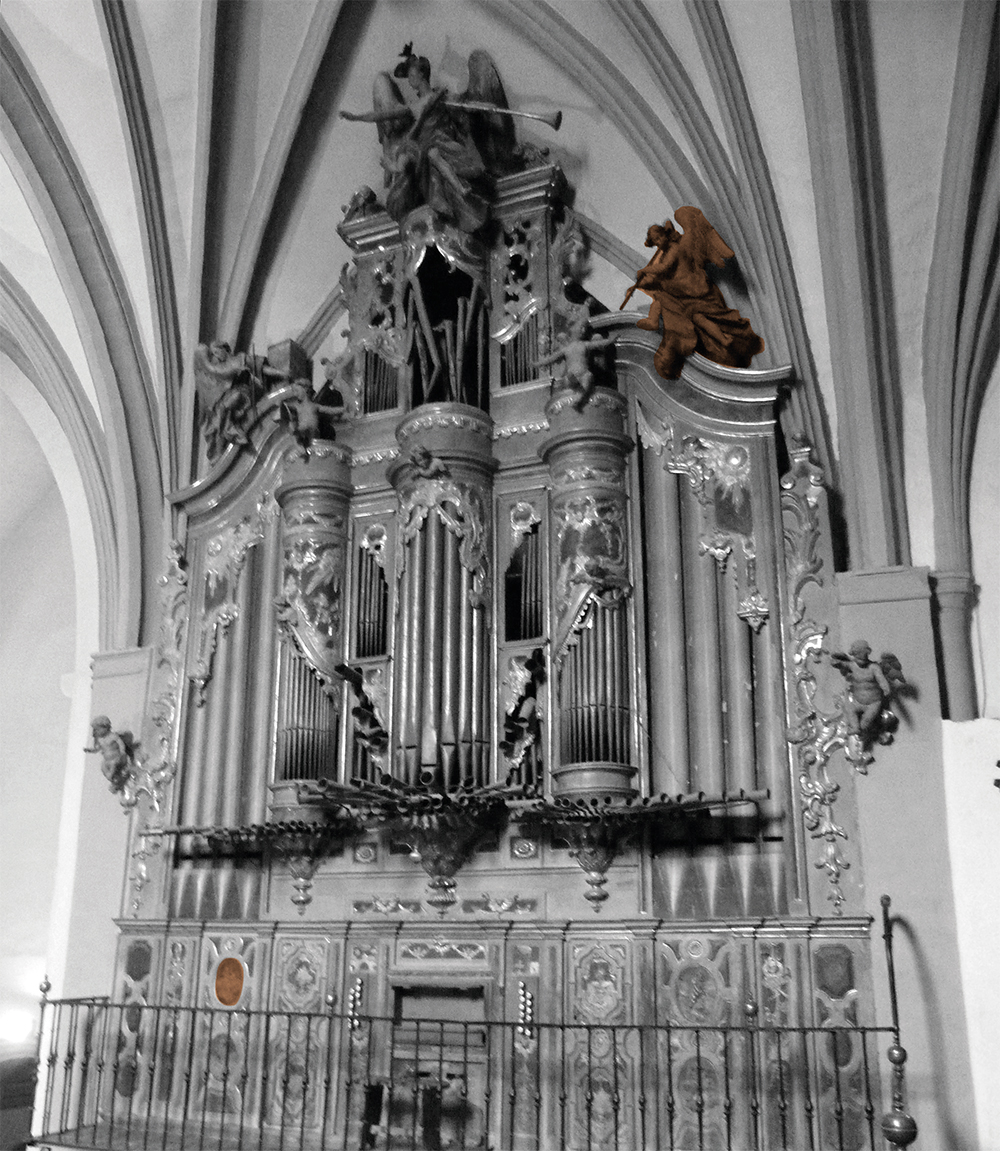

An angel playing a flute on the organ in the parish church of Sesma. (Photo: J.I. Larraioz-JMBA)
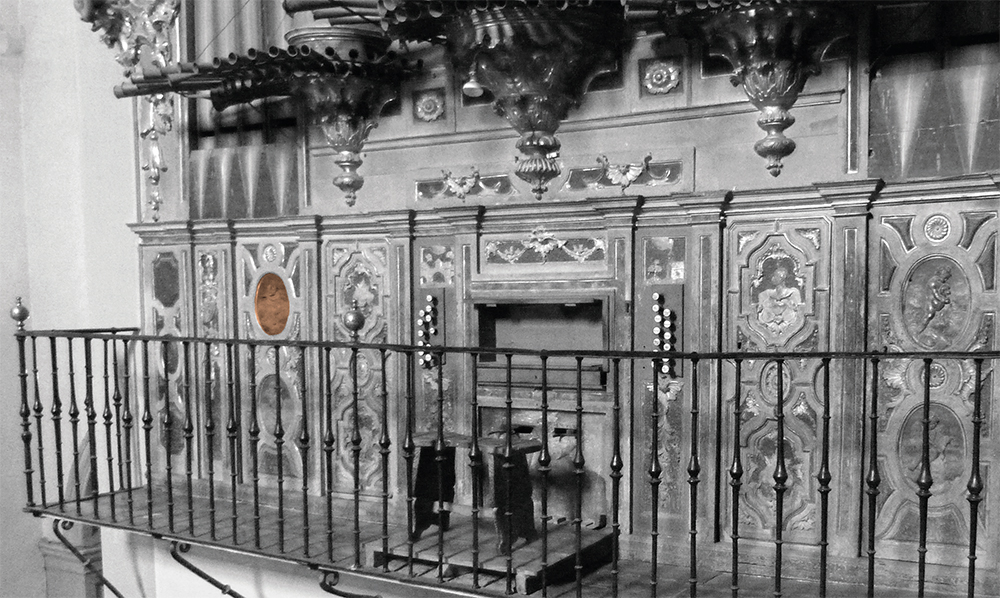

Angel flautist on the organ in Sesma. (Photo: J.I. Larraioz-JMBA)
SORLADA
CHURCH OF SAN GREGORIO OSTIENSE
On the polychromed roofs of the Church of San Gregorio Ostiense in Sorlada (Navarre) angels can be seen playing instruments, among them one playing a flute.

Angel flautist in the church in Sorlada. (Photo: JMBA)
REFERENCES
1 F. Pedrell (1894) gives this definition in his dictionary: “Pífano, […] Fifre (fr.) […]. A wind instrument, a small very high-pitched flute that is played as a flute and is accompanied by a tabor or snare drum […]”. (Pedrell, 1894, p. 868)
2 Rodríguez Suso, Carmen. (1999). Los Txistularis de la Villa de Bilbao. Bilbao: BBK - Bilbao Bizkaia Kutxa.
3 Characteristics of the tertziola: this ebony flute is 52 centimetres long and has five sections. It has five metal keys to create the chromatic scale. Completely closed, it gives an F4 in the low register and an F5 in the high register. Completely opened, it gives an E5 in the low register and an E6 in the high register.
4 Original text: “Aitak flauta jotzen zuen. Bere koinatuarekin jotzen zuen, "duo" eginez. Gure aitak "tertziola" deitutako flauta jotzen zuen eta besteak flauta handiago bat. Taldea, aipatutako bi flauta-jole eta danbor-joleak osatzen zuten. Inguruko erromerietan eta bodetan jotzen zuten. Ehun bat boda pasatuko zuten haiek... Baltseoa, fandango, arin-arin eta halakoak jotzen zituzten”. Interview with Benito Lamariano Agirre by J.M. Beltrán in Antzuola on 30 October 1998. See: Beltran, J. M. (2004). Dultzaina Gipuzkoan. 1950. hamarkada arte. Oiartzun: Herri Musikaren Txokoa.
5 Drum festival. See: http://tamborradaalardeirun.com/historia/ (Consulted on 18/08/2021).
6 This musician was originally from the Agerre farm in Lastur. His family told us that Patxi not only played the flute, but also played the dulzaina and the txistu. It can be read in DEBA magazine No. 82 (2012), page 49. (n on the Net: https://www.deba.eus/fitxategiak/DebaAldizkaria/Num82zkia_DEBA_2012_uda_t.pdf, consulted on 20/10/2021)
7 Interview by J. M. Beltran with J. J. Abasolo “Tiliño” from Iurreta in 1998.
8 Maguna, Maume, Mauma: the municipality of Muxika.
9 Told by Tiliño in a conversation on 12 November 2004.
SOURCES
Bibliography
AGUIRRE, R. (1992). Trikitixa. Gipuzkoa-Donostia Kutxa.
BELTRAN ARGIÑENA, J. M. (1996). Soinutresnak euskal herri musikan. Orain.
BELTRAN ARGIÑENA, J. M. (2004). Dultzaina Gipuzkoan 1950. hamarkada arte. HM Bilduma, 1. HMT-Erviti.
ELIAS ODRIOZOLA, I. (1999). Azkoitia historian zehar. Azkoitiko Udala.
FELIU CORCUERA, A. (1987). Tradiciones y costumbres del País Vasco (I. liburukia). Gure Herria. Kriselu.
MABRU, L. (1988). Musique, musiques... Pratiques musicales en milieu rural (XIXème-XXème siècle). L’exemple des Landes de Gascogne. Centre Lapios.
MABRU, L. (1990). Le Fifre en Bazadais. Cahiers de Bazadais (Nº 89/90). Centre Lapios.
PEDRELL, F. (1894). Diccionario Técnico de la Música. Librería París-Valencia, Faksímila, 1992.
RAMOS, J. (1990). Materiales para la elaboración de un censo de músicos populares de Euskal Herria, a partir de los instrumentistas llegados a Iruñea en el Siglo XVIII. Cuadernos de Etnología y Etnografía de Navarra, (55 zk. 91-138). Institución Principe de Viana.
RETEGUI, J. M. (2003). Tamborrada. Alarde de San Marcial de Irun. / Danborrada. Irungo San Martzialetako Alardea. Asociación Tamborrada del Alarde Tradicional de San Marcial de Irun.
RODRÍGUEZ SUSO, C. (1999). Los Txistularis de la Villa de Bilbao. BBK - Bilbao Bizkaia Kutxa.
Discography
IRUNGO ALARDEA. (1996). San Martzial Eguna [CD]. Enixe Records 02.
LEKEITIOKO ESTUDIANTINA. (1983). Aratuste Alai [LP]. IZ-185. L.G.: SS-357-1983.
Image gallery

Audio
FANDANGO ANDRE MADALEN AND ARIN-ARIN OF THE LAMARIANOS1
In the photo taken in 1917 by the photographer Martín Ricardo during the popular pilgrimage to Mount Ulia in Donostia, we see two flute players (without drums).
The brothers Benito and Augusto Lamariano from Antzuola (Gipuzkoa) formed a flute duo at the beginning of the 20th century. They performed in the popular pilgrimages of Antzuola, Bergara and other surrounding villages, one playing the tertziola and the other the flute.2
To record the fandango and the arin-arin from the Lamariano repertoire, we brought together several musicians from Oiartzun and Hernani in Soinuenea on 5 August 2021. We formed a group similar to theirs.

Flutes: students from the Ibargain Music School in Oiartzun; Haizea Lekuona (flute), Mikel Saez de Eguilaz (piccolo). Drum: Ander Barrenetxea. (Photo: Soinuenea)
REFERENCES
1 Beltran, J. M. (2004). Dultzaina Gipuzkoan. 1950. hamarkada arte. La dulzaina en Gipuzkoa. Hasta la década de 1950. The dulzaina of Gipuzkoa. Until the decade of 1950s. Herri Musika Bilduma, 1. HM Txokoa.
2 Beltran, J. M. (2004). Dultzaina Gipuzkoan. 1950. hamarkada arte. Herri Musika Bilduma, 1. HM Txokoa (F-J 5 eta A-P 27).
PIEZA DE ALBOGUE(NO. 253 OF THE CANCIONERO POPULAR VASCO SONGBOOK OF R. M. AZKUE)
In the area of Durango and Arratia (Bizkaia) reed transverse flutes have been called flautias.
This dance tune entitled Pieza de Albogue, collected in Iurreta (Bizkaia), is registered in the Cancionero Popular Vasco of Resurrección María Azkue with the number 253. This performance, which took place in Soinuenea on 5 August 2021, was given by Juan Mari Beltrán (flute) and Ander Barrenetxea (tambourine).


J. M. Beltrán and A. Barrenetxea playing the flautia (JMBA collection no. 1189) and the tambourine (JMBA collection no. 16). (Photo: Soinuenea)
OTOI (Habanera / C. Etxebarria)
Lekeitioko Estudiantina: Aratuste Alai. (IZ 185 / 1983) With the permission of the publisher Elkar, the current owner of the disc.
This recording shows the presence of the transverse flute in musical ensembles such as rondallas (groups playing plucked instruments) and estudiantinas (groups of student musicians).
This habanera entitled Otoi is taken from the record Aratuste Alai (IZ 185) that the Estudiantina of Lekeitio recorded in 1983 with the repertoire of the town's carnival rondalla. The undisputed presence of the flute in this ensemble goes back a long way.

Instrumental ensemble that recorded Aratuste Alai involving the Estudiantina of Lekeitio in 1983. (Photo: Lekeitioko Estudiantina. Aratuste Alai. IZ 185)
Full sheet
- Number:
- 103
- Classification:
- Aerophones -> Flutes -> Transverse flutes
- Notes:
- TRANSVERSE FLUTE


